I started with a question about Andrei Tarkovsky’s The Sacrifice. Then I wondered what became of the son to whom the film was dedicated. That question led backwards—to Tarkovsky’s father, the poet Arseny; to revolution and civil war; to his mother’s memories; and forwards again, to the directors around the world who have inherited, contested, and transformed his cinema.
The connecting idea is inheritance. What can one generation leave another when homes burn, nations change, families separate, and even memory is unreliable?
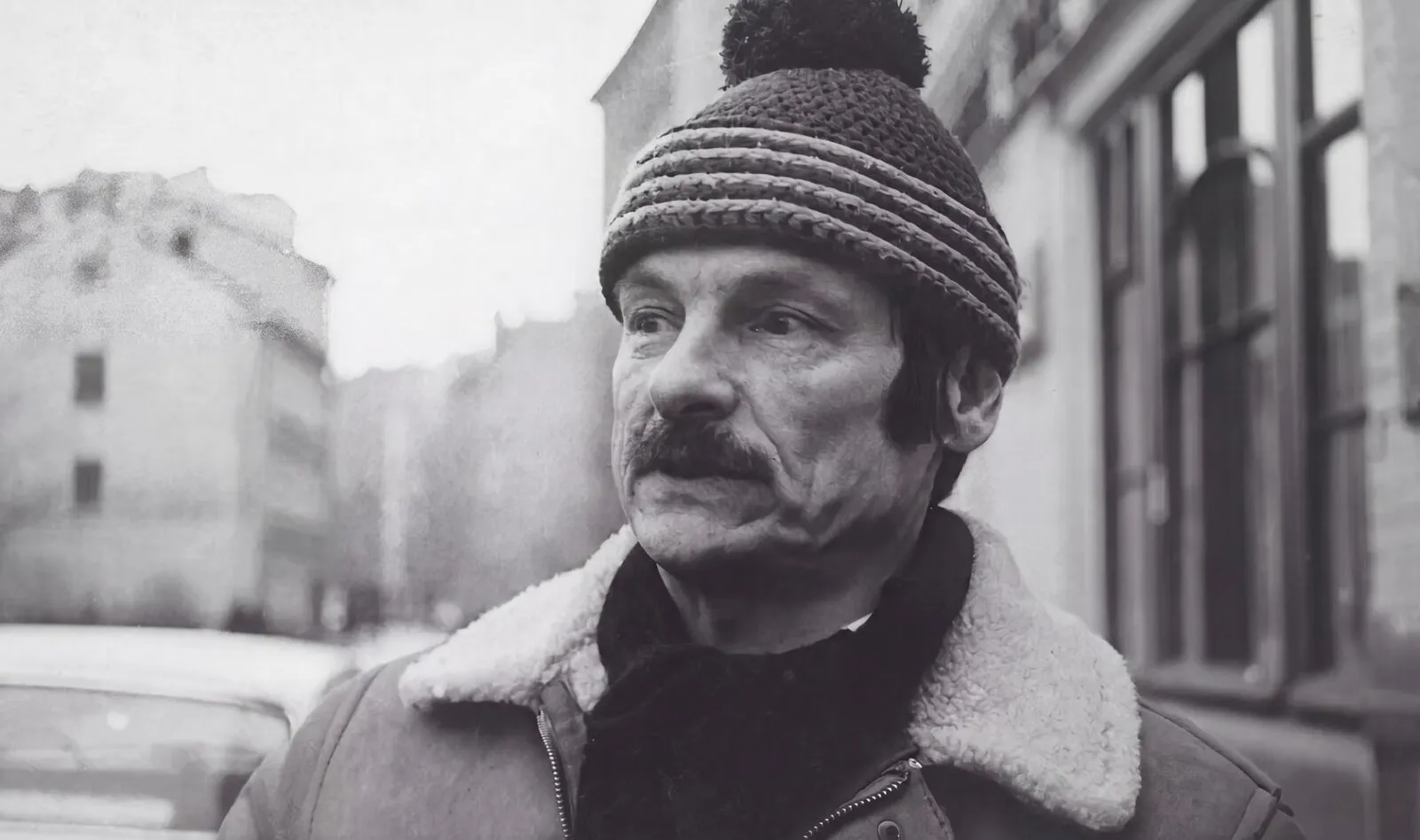
This is a journey through films and history, not a claim to have decoded the director’s symbols. Where an artistic influence is documented, I say so; where I am making a comparison, I treat it as a comparison.
Table of contents
Open Table of contents
- The tree: The Sacrifice (1986)
- The son: a reunion in the shadow of death
- The father: Arseny Tarkovsky and the revolution
- Mirror: the family becomes cinematic time
- Nostalghia: leaving without planning to be an exile
- What he changed, and who inherited it
- An eight-film viewing route
- One last tree
- Sources and further reading
- Image credits
The tree: The Sacrifice (1986)
A father and his young son plant a dead tree. The father tells a story about an old monk, Pamve, who planted a barren tree on a hillside and told his young disciple to water it every day until it came back to life. The disciple obeyed without knowing whether it would ever matter, and after three years the tree revived. This seemingly futile action will return at the end of Tarkovsky’s final film.
The father, Alexander, is a former actor and intellectual living with his family on a Swedish island. During his birthday celebration, news arrives of what seems to be a nuclear catastrophe. In fear, Alexander makes a promise to God: if the disaster is averted, he will give up everything—home, family, possessions, speech. The enigmatic postman Otto suggests that Alexander visit Maria, a woman said to have extraordinary powers. The next morning the world appears normal again. Alexander burns his house to fulfill his vow.
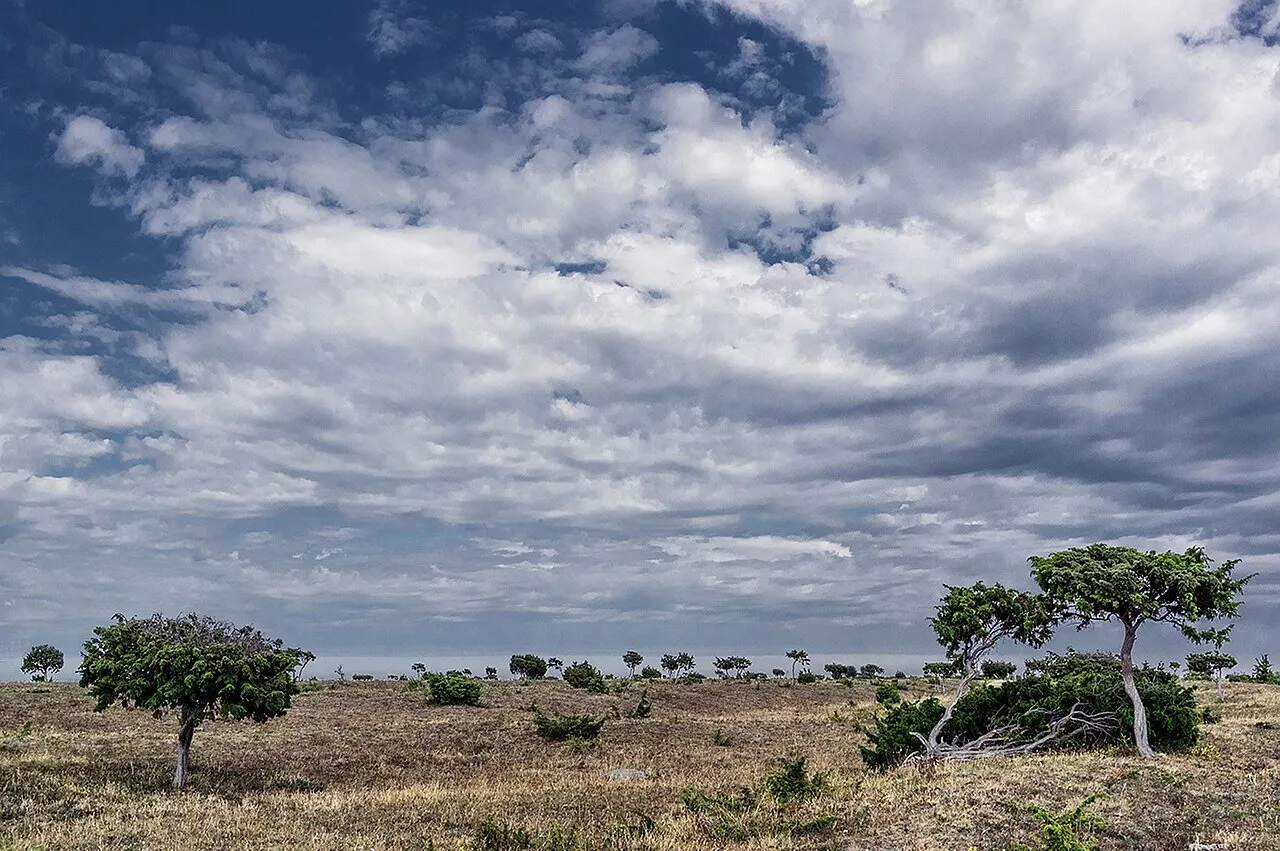
It is tempting to demand an answer: did prayer work? Did Maria save the world? Was the catastrophe a vision, or was Alexander experiencing a psychological crisis? Tarkovsky refuses a definitive explanation. The uncertainty is the film’s moral terrain.
Can a sacrifice be noble when it destroys what other people also love? Alexander’s act may be faith, madness, or both. His family bears its consequences. This is more disturbing than a simple parable about belief.
At the end the child tends the tree and asks about the opening of John’s Gospel: “In the beginning was the Word.” The father has fallen silent; the child speaks. And the film is dedicated to Tarkovsky’s son Andrei, with hope and confidence.
The son: a reunion in the shadow of death
Andrei Andreevich Tarkovsky was born in 1970. When his father went to work abroad in 1982, he stayed in the USSR. The Soviet authorities refused to let him join his parents (Tarkovsky and his second wife, Larisa) in the West and kept him from them for nearly four years.
On 19 January 1986, fifteen-year-old Andrei and his grandmother, eighty-five-year-old Anna Semyonovna Egorkina, finally arrived in Paris. The French president François Mitterrand had written to Soviet leader Mikhail Gorbachev on Tarkovsky’s behalf. Contemporary news reports describe the sudden granting of exit visas after a four-year struggle with the Soviet authorities [1]. Chris Marker filmed the reunion; that footage opens his One Day in the Life of Andrei Arsenevich.
Tarkovsky was already seriously ill. He died in Paris on 29 December 1986, aged fifty-four. Father and son had less than a year together after their long separation.
The younger Andrei went on to work in documentary filmmaking and the preservation of his father’s legacy. His Andrey Tarkovsky: A Cinema Prayer (2019) offers a valuable counterpoint to any retelling of these events: archival material and the father’s own words, not just our interpretations.
I cannot help seeing the image of the boy watering the tree as a figure for continuity after a father’s death.
The father: Arseny Tarkovsky and the revolution
The filmmaker’s father, Arseny Alexandrovich Tarkovsky (1907–1989), was a poet and translator whose verse later entered Mirror, Stalker, and Nostalghia. His mother, Maria Ivanovna Vishnyakova (1907–1979), worked for many years as a proofreader at a Moscow printing house (the printing-house episode in Mirror draws on this) and largely raised Andrei and his sister Marina, born in 1934, after Arseny left the family in the summer of 1937 [9].
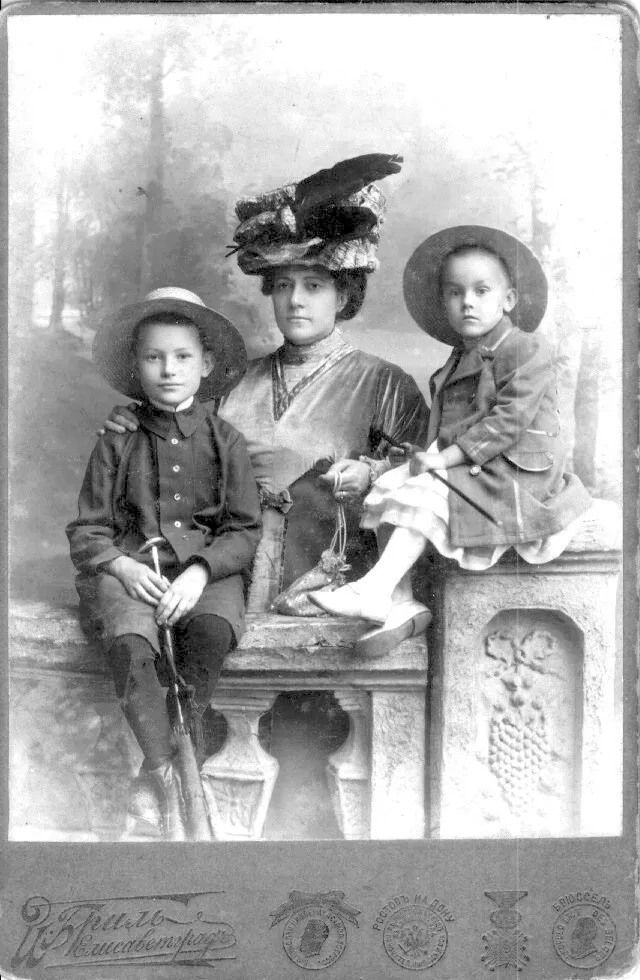
Arseny’s life reaches into the world before the director was born. He grew up in Elisavetgrad (today Kropyvnytskyi, Ukraine) during the last years of the Russian Empire. His father, Alexander Karlovich Tarkovsky (1862–1924), belonged in the 1880s to one of the populist circles linked to Narodnaya Volya, the organization that had assassinated Emperor Alexander II in 1881. He supported terror, though only in words; he was sentenced to ten years’ penal servitude and served three years in prison and five in exile in Eastern Siberia. Arseny later said his father had been arrested over an attempt on the governor of Kharkov; the documents do not bear that out [10].
That history complicates any simple portrait of a family set against the state: the grandfather had himself been a revolutionary. Revolution did not spare his family grief.
Arseny’s older brother Valery became involved in revolutionary politics and died in May 1919 amid fighting against forces associated with Nykyfor Hryhoriv in Ukraine [2]. Arseny was eleven.
In 1921, as Arseny later told it, he and his schoolmates published an anti-Lenin acrostic in a local newspaper and were arrested; he escaped while being taken to trial [2, 10].
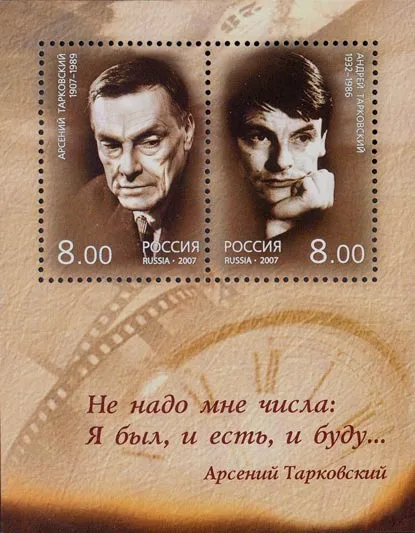
Arseny became a poet and translator in Soviet Russia, served as a war correspondent during World War II, was severely wounded in December 1943, and lost a leg [2]. Remarkably, his first collection of original poems was published only in 1962, the year his son released his first feature film, Ivan’s Childhood. Nick James, writing in the BFI’s Sight and Sound, treats the father’s poetry as a central influence on the son’s cinema [3]. Andrei used seven of Arseny’s poems in three films, and Alex Nemser and Nariman Skakov have translated all seven into English [8]:
- In Mirror, Arseny reads four himself: «Первые свидания» (“First Meetings”), «С утра я тебя дожидался вчера…» (“From the Morning…”), «Жизнь, жизнь» (“Life, Life”) and «Эвридика» (“Eurydice”).
- In Stalker, the Stalker recites «Вот и лето прошло…» (“So Summer Has Passed”) in the Zone and attributes it to Porcupine’s brother.
- In Nostalghia, Gorchakov recites «Я в детстве заболел…» (“As a Child…”) from memory, not quite accurately, and «Меркнет зрение — сила моя…» (“My sight, my strength, dims…”) is heard in Italian.
The record of what 1917–1921 cost Maria’s family is thin.
Mirror: the family becomes cinematic time
Mirror (1975) is not a conventional autobiography in chronological sequence. It moves like recollection: a mother seated on a fence, wind across a field, a house, wartime sounds, dreams, newsreels, an adult’s guilt. The same actress plays figures across generations. And Arseny reads his poems over the images.
Here the father’s voice literally inhabits the son’s vision. Yet the film is not a private family album. It allows the upheavals of the twentieth century to surface in the intimate textures of childhood.
How do we remember history? Not only through dates, battles, decrees, and names. Sometimes through the tone of a parent’s voice, the light in a room, or the fear that someone will not return. Mirror reproduces that experience without reducing it to an explanation.
This is why knowing the family history enriches Mirror—but does not exhaust it.
Nostalghia: leaving without planning to be an exile
Tarkovsky did not originally depart the Soviet Union as a permanent émigré. In 1982 he went to Italy with official permission to make Nostalghia (1983), working with Italian collaborators including Tonino Guerra.
He had faced years of obstruction from the Soviet film establishment. Andrei Rublev was finished in 1966 and held back from Soviet release until 1971; other films and projects faced resistance. International recognition did not end the obstruction at home.
On 10 July 1984, at a press conference in Milan, he announced his decision not to return to the USSR. Contemporary reporting quotes his complaint that his filmmaking had been repeatedly obstructed and records the unresolved separation from his son [4].
Calling this simply a political defection misses its personal and artistic dimensions. He wanted to make films and to be with his family. Instead, obtaining freedom to work abroad meant losing an ordinary home life in Russia.
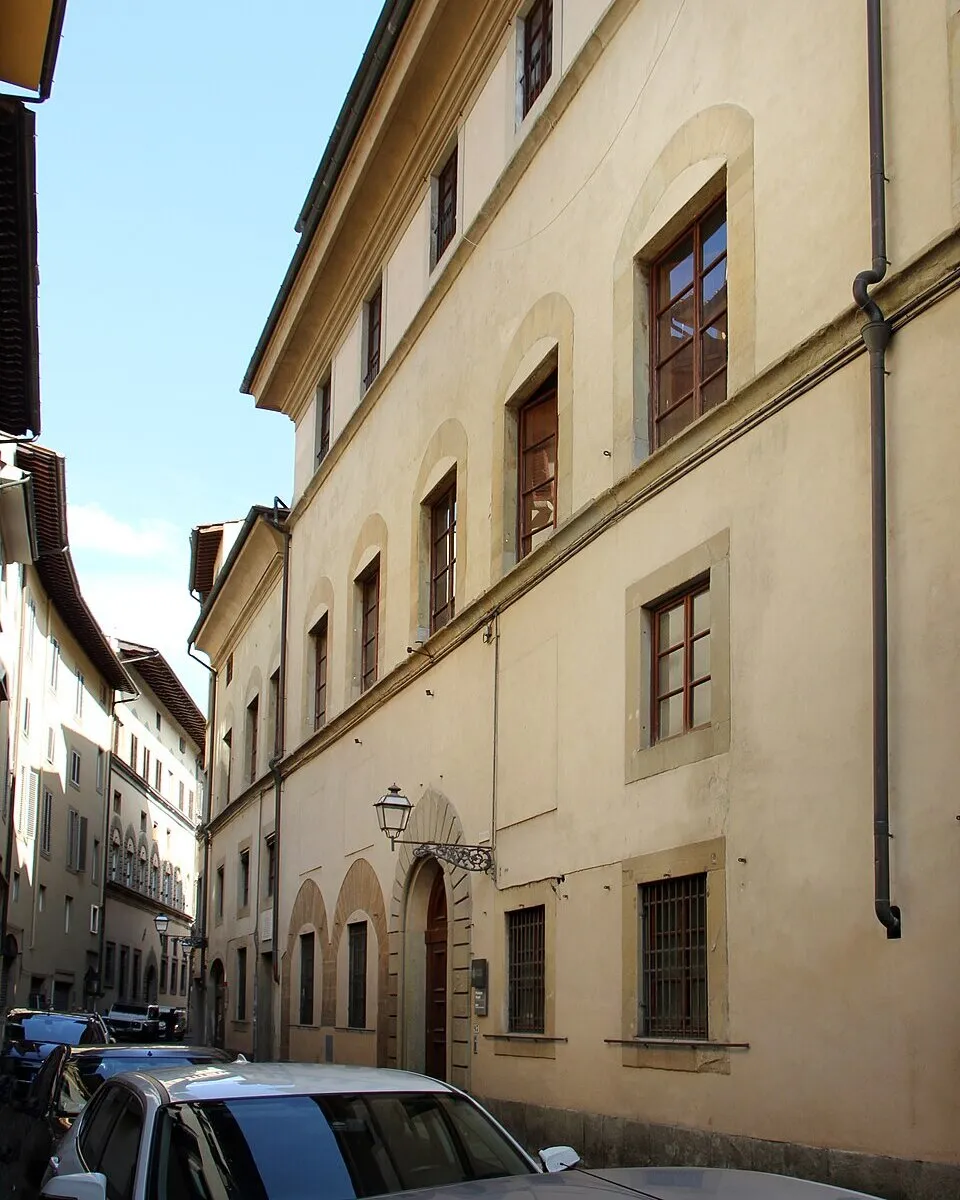
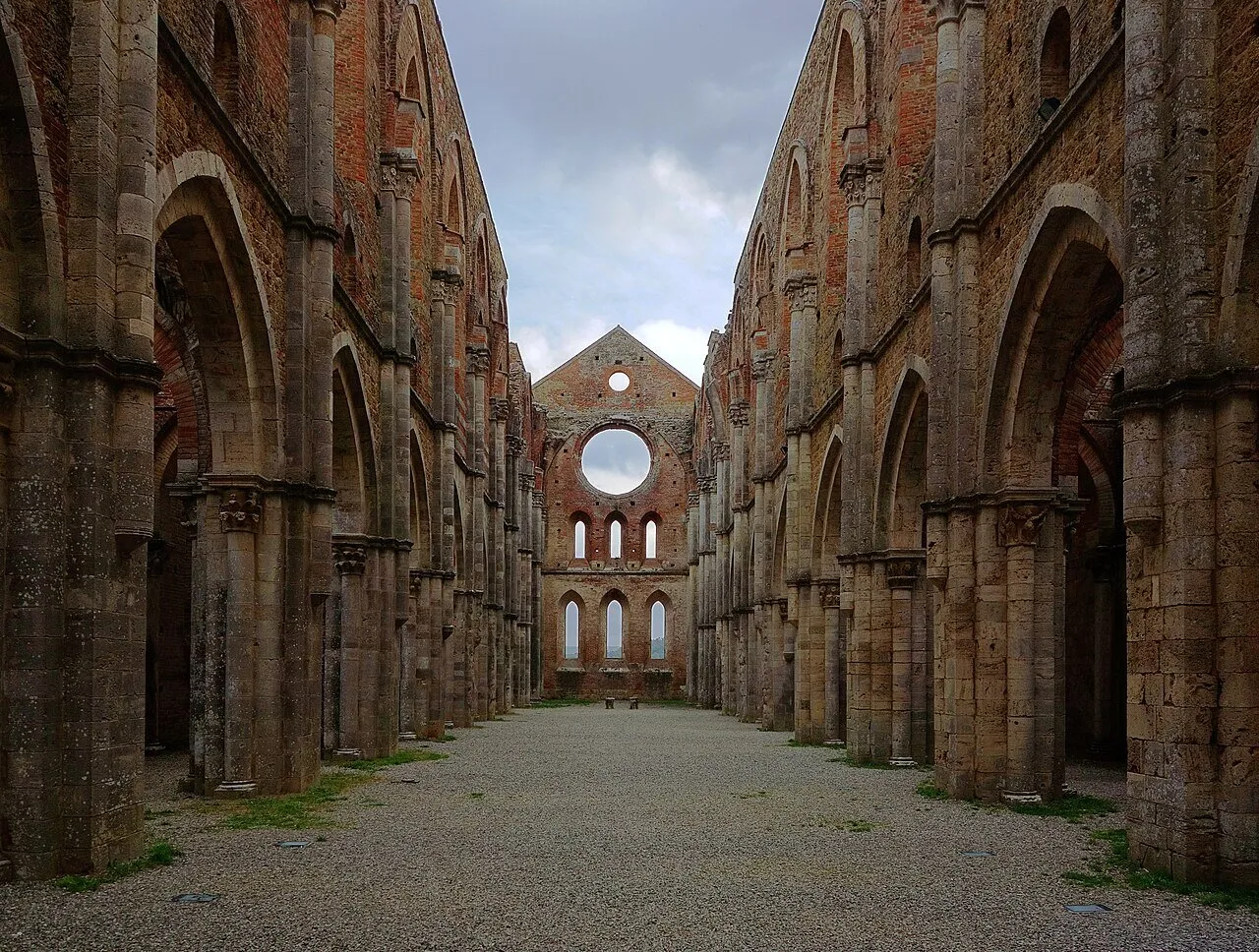
Nostalghia, completed before the public break, now feels uncannily autobiographical: a Russian intellectual travels in Italy, neither at home abroad nor able to inhabit the homeland he imagines. In the final image, a Russian house seems contained within an Italian abbey. The two landscapes coexist without becoming one.
In Sculpting in Time, Tarkovsky wrote that he wanted to make “a film about Russian nostalgia—about the particular state of mind which assails Russians who are far from their native land,” and he set it against “the entire history of Russian emigration.” The Russian house inside the abbey belongs to that history too: to the Russians who left after 1917 and kept their houses only in memory.
By The Sacrifice, made in Sweden with cinematographer Sven Nykvist, the lost house is no longer only remembered. It is burned.
What he changed, and who inherited it
Tarkovsky is not admired because his films are difficult, because his characters speak philosophically, or because mist and water look beautiful. His achievement is more specific: he expanded cinema’s ability to render experienced time.
Long takes were not his invention. Kenji Mizoguchi and Antonioni built films from them before him, and Miklós Jancsó was doing so in the same years. What is distinctly his is the argument of Sculpting in Time: that the medium’s material is time impressed into the image, and that “rhythm is not determined by the length of the edited pieces, but by the pressure of the time that runs through them.” He lets a shot continue after a plot-driven film would cut, and wind, water, silence and faces have time to become events in their own right. Nature is not a code in which rain means grief and fire means purification; it stays concrete while gathering emotional force.
In Solaris (1972), an encounter with an alien intelligence becomes an inquiry into grief, guilt, love, and the limits of knowing another person. The central puzzle cannot be solved with better equipment.
In Stalker (1979), a room supposedly fulfills one’s deepest desire. But what if we do not know our own deepest desire? The science-fiction premise becomes a test of self-knowledge.
The painterly references—to Leonardo, Bruegel and other European masters—the father’s poems, Orthodox spiritual imagery and unusual soundscapes all contribute. But imitating the wet floors and long tracking shots misses the point. A Tarkovskian shot must do something with our sense of time.
There are legitimate objections: his films can feel excessively slow, his characters can declaim rather than converse, and women are at times treated mainly through men’s spiritual quests. Appreciation need not be worship. His achievements are worth serious criticism, not protective reverence.
As for who inherited it, Nick James’s substantial BFI essay, “The Tarkovsky legacy”, is an excellent map of both explicit influence and more subtle aesthetic kinships [3].
Ingmar Bergman is a crucial predecessor and, at a distance, an interlocutor—though the two men never spoke. Tarkovsky first saw him in September 1984, from the audience at a Film Institute screening in Stockholm, and did not go up to him. A year later, at a film-poster exhibition in Stockholm’s Film House, Michal Leszczylowski, Tarkovsky’s editor on The Sacrifice, watched the two notice each other fifteen meters apart, turn at the same moment and walk off in opposite directions.
Meetings were arranged and called off again and again; Anna-Lena Wibom, who produced The Sacrifice, recalled that the thought of needing an interpreter irritated Bergman, though the film scholar Dmitry Salynsky doubts that was the real obstacle [7]. Winter Light (1963) addresses faith and God’s silence; The Sacrifice was made with important Swedish collaborators, including Bergman’s cinematographer Sven Nykvist.
Robert Bresson’s Diary of a Country Priest (1951) and Michelangelo Antonioni’s L’Avventura (1960) provide other routes into spiritual austerity and landscapes of absence.
Lars von Trier offers a documented line of influence. He has spoken repeatedly of his admiration for Mirror and dedicated Antichrist (2009) to Tarkovsky. His Melancholia (2011) makes a provocative companion to The Sacrifice: the world may end, but the possibility of redemption is entirely different.
Béla Tarr (1955–2026), especially with Werckmeister Harmonies (2000), teaches us to distrust superficial resemblance. His long takes and apocalyptic atmospheres invite comparisons with Tarkovsky, but Tarr drew the line himself: Tarkovsky was religious and he was not; Tarkovsky “always had hope; he believed in God” [3]. In a 2011 interview he put it more plainly still: he does not believe in God [5]. Similar form, different metaphysics.
Nuri Bilge Ceylan names Tarkovsky among his biggest influences [6]. In Distant (Uzak, 2002), the sight of someone watching Stalker even becomes a joke about aesthetic pretension. Once Upon a Time in Anatolia (2011) transforms patient observation into a moral mystery of ordinary people.
Andrey Zvyagintsev’s The Return (2003) and The Banishment (2007) converse with Tarkovsky in their father figures, water, landscape and moral uncertainty. They should not be mistaken for mere copies.
Other films make illuminating comparisons rather than demonstrable direct lines of influence. Terrence Malick’s The Tree of Life (2011) expands a remembered childhood into cosmic history; critics, James among them [3], count Malick among Tarkovsky’s heirs, but Malick, who almost never gives interviews, has not said so himself. Krzysztof Kieślowski’s Three Colours: Red (1994) asks about invisible moral connections. Apichatpong Weerasethakul’s Uncle Boonmee Who Can Recall His Past Lives (2010) and Memoria (2021) explore forms of memory not confined to one individual.
These differences are the measure of Tarkovsky’s reach. Influence matters most when it generates new questions, not perfect reproductions of an established style.
An eight-film viewing route
I would follow this sequence to study the lineage rather than merely assemble a list of slow films (titles link to IMDb). The order is thematic, not chronological: first the man, then a predecessor, then Tarkovsky’s own Mirror, then five films that each answer one of its questions—family memory, the end of the world, time without God, a moral mystery without miracles, and memory that belongs to no one person. It assumes you have seen The Sacrifice, where this essay began, and it ends by sending you back to it.
- Chris Marker, One Day in the Life of Andrei Arsenevich (2000). The filmmaker, his work, and his last years, beginning with the reunion with his son.
- Ingmar Bergman, Winter Light (1963). The silence of God before The Sacrifice.
- Andrei Tarkovsky, Mirror (1975). How an individual remembers a century.
- Terrence Malick, The Tree of Life (2011). The family and the universe in one visual thought.
- Lars von Trier, Melancholia (2011). An apocalypse without Alexander’s bargain.
- Béla Tarr and Ágnes Hranitzky, Werckmeister Harmonies (2000). Time without the same promise of transcendence.
- Nuri Bilge Ceylan, Once Upon a Time in Anatolia (2011). Mystery and responsibility without supernatural rules.
- Apichatpong Weerasethakul, Memoria (2021). Memory at the boundary of consciousness and the world.
Three worthwhile detours are Bresson’s Diary of a Country Priest, Antonioni’s L’Avventura, and Zvyagintsev’s The Return. Alongside the films, add Directed by Andrei Tarkovsky (1988), Michal Leszczylowski’s documentary about the making of The Sacrifice, which follows both attempts to film the burning house; Voyage in Time (1983), in which Tarkovsky and Tonino Guerra travel through Italy looking for the places of Nostalghia; Instant Light, the Polaroids Tarkovsky took of his family and friends in Russia and of Italy between 1979 and 1984; I Burned at the Feast, Arseny’s selected poems in English, translated by Philip Metres and Dimitri Psurtsev; and Maria Popova’s reading of Sculpting in Time.
Then watch The Sacrifice again.
One last tree
Laid out on one timeline, the four generations show the pattern plainly: a grandfather’s prison and exile, revolution and civil war, a poet’s war wound, the divided household of Mirror, censorship and a film shelved for five years, exile, and a son reunited with his father only months before his death. The arrows between the lanes are the inheritance that can actually be documented: seven poems, one dedication, one film made from a father’s own words.
Four generations, one timeline
- documented in the numbered sources
- a later retelling
- a thin record
- passed from one life to another
- a family separated
- Prison and exile Alexander Karlovich, in a populist circle linked to Narodnaya Volya, the organization that had assassinated Alexander II, serves three years in prison and five in exile in Eastern Siberia. § The father · [10]
- Arseny and Maria are born Arseny in Elisavetgrad, in the south of the Russian Empire; Maria Vishnyakova, his future wife, the same year. § The father
- Revolution and civil war, 1917–1921
- Valery is killed Arseny's elder brother dies in battle against the forces of Nykyfor Hryhoriv. Arseny is eleven. § The father · [2]
- Arrest and escape, as later told An anti-Lenin acrostic in a local newspaper, an arrest, and an escape on the way to trial. § The father · [2] · [10]
- Alexander Karlovich dies
- Andrei is born His sister, Marina, follows in 1934. § The father
- The household divides Arseny leaves the family. Maria, a proofreader at a Moscow printing house, raises the children; Mirror will return to both. § The father · [9]
- War, 1941–1945
- A war correspondent is wounded Arseny is hit at the front; his leg is amputated. § The father · [2]
- Two debuts in one year Arseny's first collection of his own poems; Andrei's first feature, Ivan's Childhood. § The father
- Andrei Andreevich is born The son of Andrei and his second wife, Larisa. § The son
- Maria dies
- Abroad, 1982–1986
- To Italy, without his son Andrei leaves with official permission to make Nostalghia; the Soviet authorities keep the boy at home. § Nostalghia
- Nostalghia 2 poems Gorchakov recites one of Arseny's poems from memory; another is heard in Italian. § The father · [8]
- Milan: he will not return A press conference announces his decision to stay in the West. § Nostalghia · [4]
- The Sacrifice dedication The last film is dedicated to his son, with hope and confidence. § The tree
- Andrei dies in Paris He is fifty-four. Father and son have had less than a year together. § The son
- Arseny dies The poet outlives his son by almost two and a half years. § The father · [2]
- A Cinema Prayer archive Andrei Jr. builds a film from archival material and his father's own words. § The son
Biography alone does not explain why Tarkovsky matters as an artist. What stays with me is something else: continuity is an action, not a guarantee.
One filmmaker believes in an act of faith. Another finds only a stuffed whale in a cold town square. Another hears an inexplicable sound that seems older than herself. Each is responding, in a different language, to questions of time, loss, memory and the limits of knowledge.
At the end of The Sacrifice, the child waters a tree that may never revive. He does not know the outcome. Neither do we.
And perhaps this is where an account of Tarkovsky’s world influence should end: not with a canon or a ranking, but with somebody continuing the work.
Sources and further reading
- UPI, report on the family reunion (19 January 1986).
- Culture.ru, biography of Arseny Tarkovsky (Russian; later biographical account).
- Nick James, “The Tarkovsky legacy,” Sight and Sound / BFI.
- UPI, report from Tarkovsky’s Milan press conference (10 July 1984).
- Eye for Film, interview with Béla Tarr about The Turin Horse (2011).
- Eye Filmmuseum, Mirror in the film programme accompanying its Nuri Bilge Ceylan exhibition.
- Gosfilmofond, “Невстреча с Бергманом” (Russian; quotes Tarkovsky’s diary, Michal Leszczylowski and Anna-Lena Wibom, with a commentary by Dmitry Salynsky); see also Vechernyaya Moskva, “Бергман и Тарковский: несостоявшаяся встреча” (Russian).
- Alex Nemser and Nariman Skakov, English translations of the Arseny Tarkovsky poems in Andrei Tarkovsky’s films, Nostalghia.com (first published in Nathan Dunne, ed., Tarkovsky, Black Dog Publishing, 2008).
- Gosfilmofond, «Уход отца» (Russian; Arseny leaves the family in the summer of 1937, told from Marina Tarkovskaya’s memoirs, with a commentary by Dmitry Salynsky).
- Valery Shubinsky, interviewed by Alexei Chernikov, «Малолетний „террорист“ и любимец женщин. Каким был последний поэт Серебряного века Арсений Тарковский», Snob (2024) (Russian).
For first-person materials: Tarkovsky’s Sculpting in Time and Time Within Time (his diaries). For a family perspective, Marina Tarkovskaya’s Oskolki zerkala (Shards of the Mirror). For films about the filmmaker: Chris Marker’s One Day in the Life of Andrei Arsenevich (2000) and Andrei Tarkovsky Jr.’s A Cinema Prayer (2019).
Image credits
All images come from Wikimedia Commons. They are used under the licenses named below; some were resized for the web.
- Andrei Tarkovsky in Moscow, 1980: photo by Boris Baldin, CC BY-SA 4.0, via Wikimedia Commons.
- Närsholmen, Gotland: photo by Måns Hagberg, CC BY-SA 4.0, via Wikimedia Commons.
- Arseny Tarkovsky with his mother and older brother, 1911: photo by Israel Bril, public domain (PD-RusEmpire), via Wikimedia Commons.
- Russian souvenir sheet with stamps of Arseny and Andrei Tarkovsky, 2007: public domain as a Russian postage stamp (PD-RU-exempt), via Wikimedia Commons.
- Palazzo Gianni Vegni, Florence: photo by Francesco Bini, CC BY-SA 4.0, via Wikimedia Commons; cropped. Plaque text from a photo by RobertGreenham.
- Abbey of San Galgano: photo by Spike, CC BY-SA 4.0, via Wikimedia Commons.


